Assess
Know what you're selling.
Benchmark analysts and teams against hands-on tasks to find strengths and gaps across the bench.
Get analysts billable faster, keep service quality high, and prove the capability behind every client engagement. HTB Cyber Workforce Development helps MSSPs and MDR providers build, drill, and measure cyber skills across the bench.

Every new client puts more pressure on the bench.
You need analysts productive quickly, consistent performance across teams, and enough depth to take on more work without putting every difficult case in front of the same senior people.
You may have a readiness gap if:
New hires take too long to become billable
Service quality varies by analyst or pod
Junior analysts escalate work your seniors shouldn't be handling
Critical client knowledge sits with a few experienced people
Certifications tell you who passed, not who can perform
Client bids ask for capability evidence you have to assemble manually
AI is taking L1 work without a clear development path for the people who used to learn from it
Growth depends on hiring skills you could be building internally
For an MSSP, workforce readiness isn't just an internal metric.
It's part of what your clients are paying for.
Your clients buy expertise. They want to know the people protecting them can detect, investigate, respond, hunt, and emulate the threats they face.
And their requirements become yours.
SOC 2. PCI DSS. HIPAA. CMMC.
Different clients bring different obligations to the same bench. Hack The Box gives you a way to build capability against those demands and show evidence behind the service you're selling.
Know what you're selling.
Benchmark analysts and teams against hands-on tasks to find strengths and gaps across the bench.
Close the gaps by role.
Give people structured development from junior analyst through advanced defensive and offensive roles.
Practice the work clients expect.
Build individual judgment, then test teams against realistic incidents and full attack chains.
Prove the bench is moving.
Track capability, response performance, framework coverage, and readiness over time.
Assess. Build. Drill. Measure. Repeat.
A new analyst only starts creating value when they can perform at the standard you sell.
Waiting months for live client work to build that experience slows growth and puts quality at risk.
HTB gives new hires hands-on practice before the client becomes the training environment.
Build role-specific skills
Practice realistic tasks
Measure capability
Move toward billable work
Move people toward billable work with evidence behind the decision.
Easi, an MSSP customer, cut onboarding time by 40% with HTB.
Faster onboarding doesn't just improve learning.
It shortens the distance between hiring someone and putting their skills to work.
SOC Range
Every analyst is client-facing through the decisions they make.
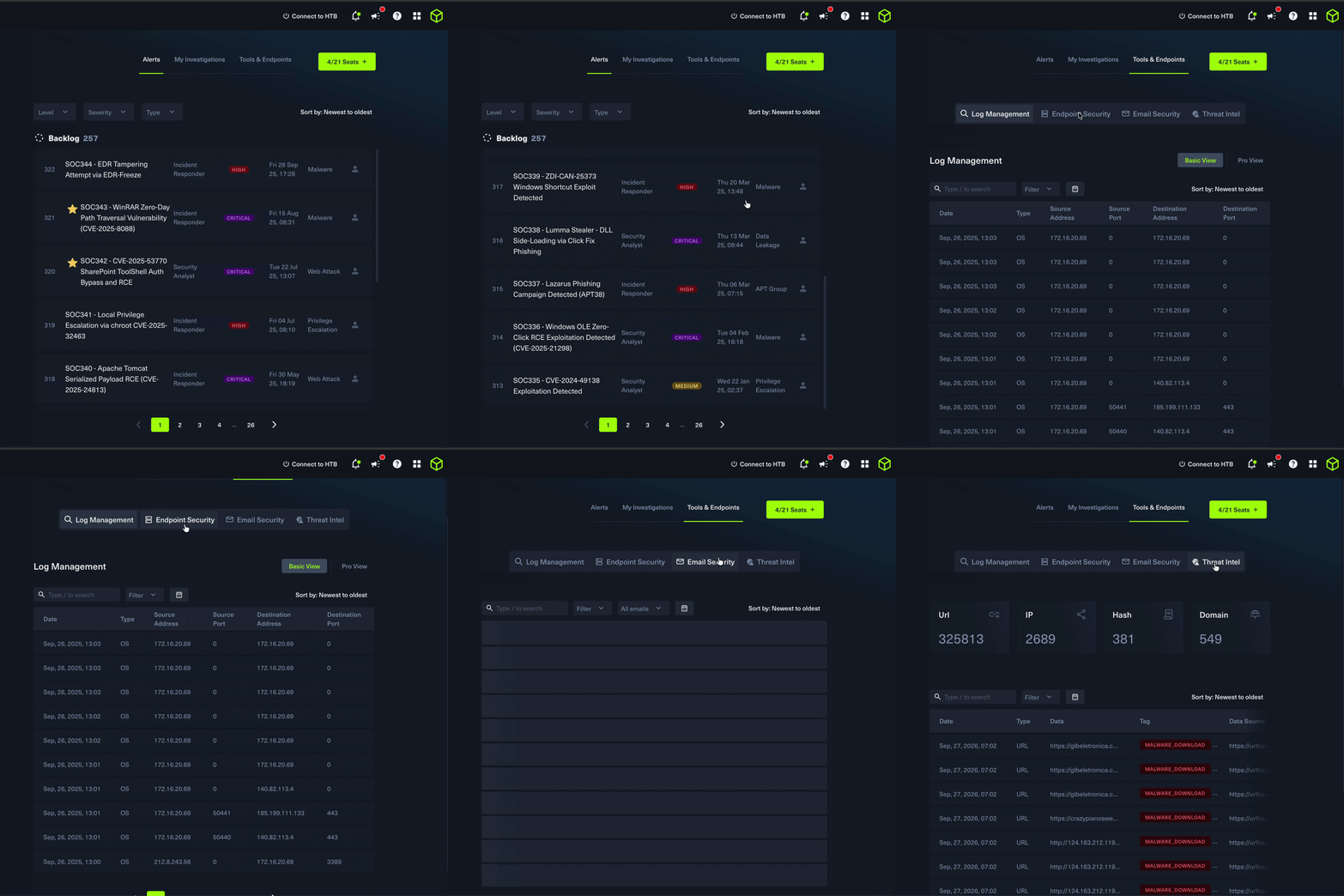
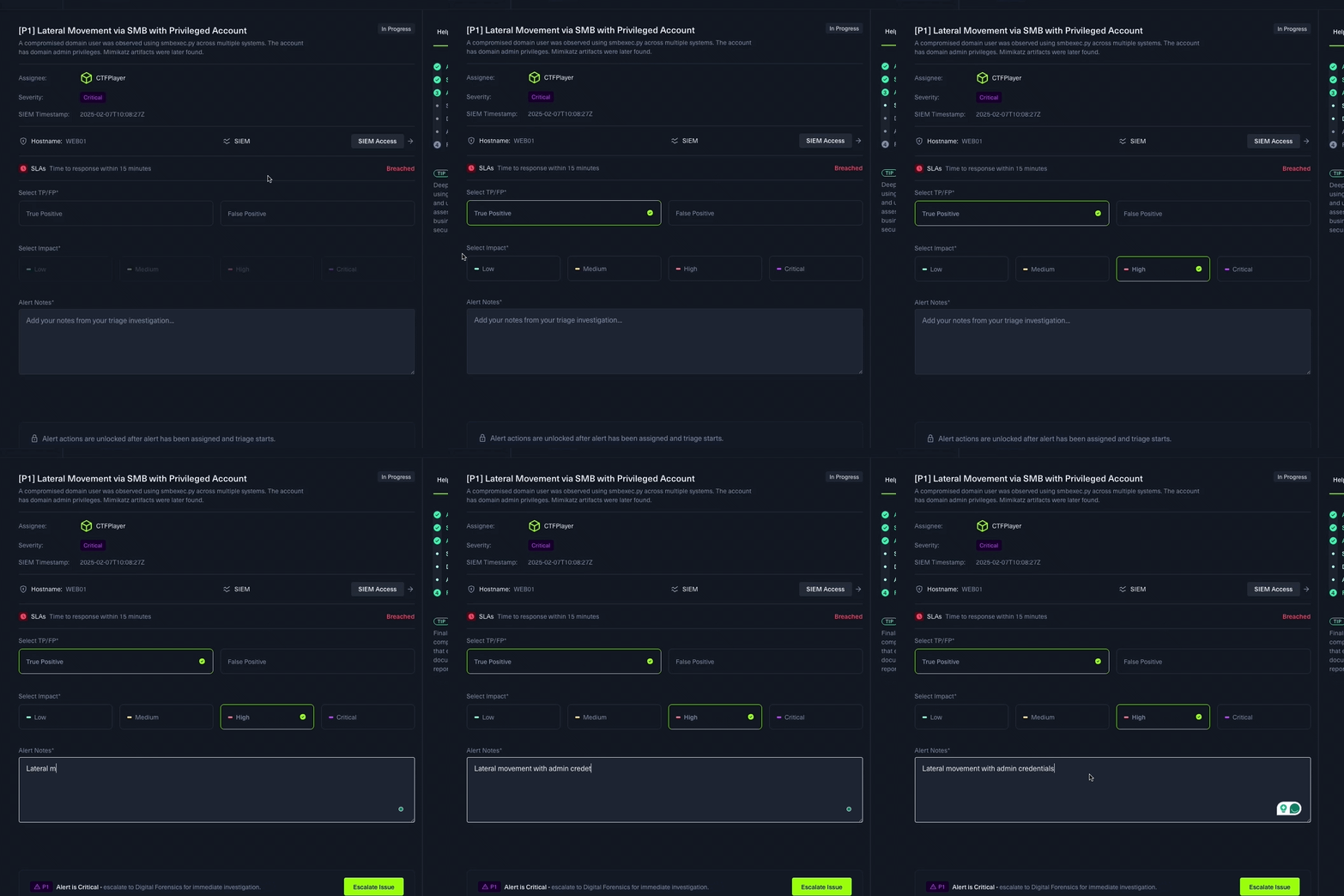
SOC Range gives analysts repeated practice investigating realistic alerts, working through evidence, following playbooks, and taking incidents from backlog to closure.
Junior analysts get more opportunities to build triage judgment without learning every lesson on a client's live environment.
The payoff is practical.

Threat Range
Clients aren't buying isolated skills.
They're buying a team that can respond when an attack is moving.
Threat Range puts SOC and DFIR teams through full attack chains and measures how they detect, triage, escalate, and respond together.
Track performance through measures including:
Now service quality can be drilled and measured before a client incident puts it to the test.

Your bench doesn't only deliver SOC services.
Deeper capability creates services you can package and sell.
The stronger the bench becomes, the more expertise you have available to put behind the next client need.
Build and demonstrate the skills behind a higher-value hunting service.
Professional Labs give offensive practitioners full-chain enterprise environments where they can build the depth needed for adversary emulation and purple-team services.
Cloud Labs develop offensive and defensive capability across cloud environments.
The AI Red Teamer path and COAE build skills to test AI systems and agentic tooling.
AI is absorbing more of the work junior analysts used to learn on.
For MSSPs, that creates a choice.
Reduce the bench as routine work disappears.
Or develop people to work above the automation.
Your analysts still need to know
And some need the skills to test the AI systems your clients are starting to deploy.
HTB helps build both sides of that capability.
Develop practitioners who can direct and supervise AI-driven security work.
Build offensive skills to test models, agents, data, and AI tooling.
The goal isn't to preserve yesterday's L1 role.
It's to build tomorrow's L2.
DeepSeas faced that decision directly.
A SOC AI initiative put L1 analyst roles at risk.
Instead of treating automation as a headcount exercise, DeepSeas mapped SOC roles to NIST NICE, identified competency gaps, and built targeted development plans for each analyst level.
Zero
layoffs
Retained
Analysts retained and promoted
Deployed
SOC automation with the right team in place
AI changed the work.
Workforce development helped the people move with it.
Build job-ready skills before client work becomes the training ground.
Give analysts and teams repeated practice against realistic security work.
Build better judgment lower in the bench so routine decisions don't keep moving upward.
Develop threat hunting, adversary emulation, cloud, and AI-security skills you can put behind new services.
Use hands-on performance and readiness data to strengthen client conversations and bids.
For an MSSP, workforce development is tied directly to delivery.
Proof of workforce impact
Analyst recognition


HTB was named a Leader in The Forrester Wave for Cybersecurity Skills and Training Platforms.
40%
Easi cut onboarding time by 40% with HTB.
50%
The Forrester TEI composite organization reduced penetration-testing baseline discovery time by 50%.
3–4
Penetration-testing managers could oversee three to four engagements at once, up from one to two.
50%
The incident response team acknowledged threats faster.
30%
The same team reduced mean time to respond.
Better capability doesn't only affect training metrics.
It affects capacity, service delivery, and margin.
The frameworks your clients answer to become part of the work your analysts deliver.
Clients need confidence that the people operating security controls can perform consistently.
Teams serving payment environments need skills aligned to the security work those environments demand.
Healthcare clients bring another set of security obligations and expectations to the service.
Government and defense clients place further requirements on the teams and services supporting their environments.
HTB helps you build and measure the underlying cyber capability across the bench.
Job-role development can map to NIST NICE and DoW DCWF / 8140.
Threat-focused practice can map to MITRE ATT&CK.
Your clients' requirements vary.
Your answer is a bench whose capability you can prove.
In your demo, we'll show you how to
We'll focus on the workforce measures tied to your delivery model, client requirements, and growth plans.
Not a generic platform tour.
Certifications can provide useful evidence of individual skill.
They don't tell you whether every new hire meets your service standard, how consistently pods perform, or where capability gaps sit across the bench.
HTB adds hands-on benchmarking, role development, realistic practice, team drills, and readiness measurement.
Give new hires structured, hands-on development before they learn through live client work.
Benchmark what they can do, target their gaps, and measure progress toward the role they need to perform.
Easi cut onboarding time by 40% using HTB.
The supplied MSSP material explicitly positions bench readiness as both the product and a differentiator.
Skills, framework coverage, practical certifications, and measured team performance can give clients stronger evidence of the capability behind your service.
The MSSP material identifies SOC 2, PCI DSS, HIPAA, and CMMC as examples of client obligations that flow down to the bench serving them.
HTB supports workforce development mapped to frameworks including NIST NICE, DoW DCWF / 8140, and MITRE ATT&CK.
AI can absorb more routine L1 work.
That makes development more important for the people who remain.
Analysts need to move toward higher-value work and build the judgment to supervise, validate, and override AI-driven security decisions.
DeepSeas used this model to support internal mobility while deploying SOC automation, with analysts retained and promoted.
The supplied MSSP material specifically connects workforce capability to threat hunting, adversary emulation, purple-team services, incident response, and AI-security capability.
Build the skill internally, prove the bench has it, then put that expertise behind the service.
Get new hires productive sooner.
Build more capability behind every service.
Keep quality consistent as you scale.
Give your strongest people somewhere to grow.
And when the next client asks what makes your team different, show them.
Fill the form to schedule a live product demo and Q&A about our cyber readiness solutions.
Maximum curriculum management flexibility, enhanced skills reporting, and engaging gamification features. Book a demo to get the business results.
Your plan includes: