Assess
Find capability gaps before an incident exposes them.
Benchmark individuals and teams through hands-on tasks instead of relying only on training history or certifications.
Develop, drill, and measure the people protecting clinical systems, patient data, and critical healthcare operations. Hack The Box’s Cyber Workforce Development helps healthcare security teams find capability gaps, prepare for real attacks, and prove readiness before disruption puts care at risk.
Healthcare security teams aren't only protecting data.
They're protecting systems people depend on to deliver care.
That raises the cost of an unprepared response.
You may have a readiness gap if:
Critical response knowledge sits with a few senior people
Analysts complete training but haven't practiced realistic healthcare attacks
Incident runbooks exist but haven't been rehearsed under pressure
You can report training activity, but not demonstrated capability
Security teams struggle to keep pace with ransomware and evolving attacker behavior
Compliance evidence doesn't show how teams will perform during an incident
AI is entering security workflows without enough people prepared to supervise it
workforce shortages leave little margin when an incident escalates
Your product keeps changing.
Your workforce has to change with it.
Find capability gaps before an incident exposes them.
Benchmark individuals and teams through hands-on tasks instead of relying only on training history or certifications.
Target development around the work people perform.
Create role-based paths across SOC, incident response, offensive security, cloud, and emerging AI-security disciplines.
Put skills into practice.
Give individuals realistic repetitions and test teams together against full attack chains.
Turn performance into evidence.
Track skills, threat coverage, team performance, and workforce readiness over time.
Assess. Build. Drill. Measure. Repeat.
A healthcare incident doesn't give junior analysts extra time to learn.
They need the judgment to distinguish noise from something that could threaten critical operations.
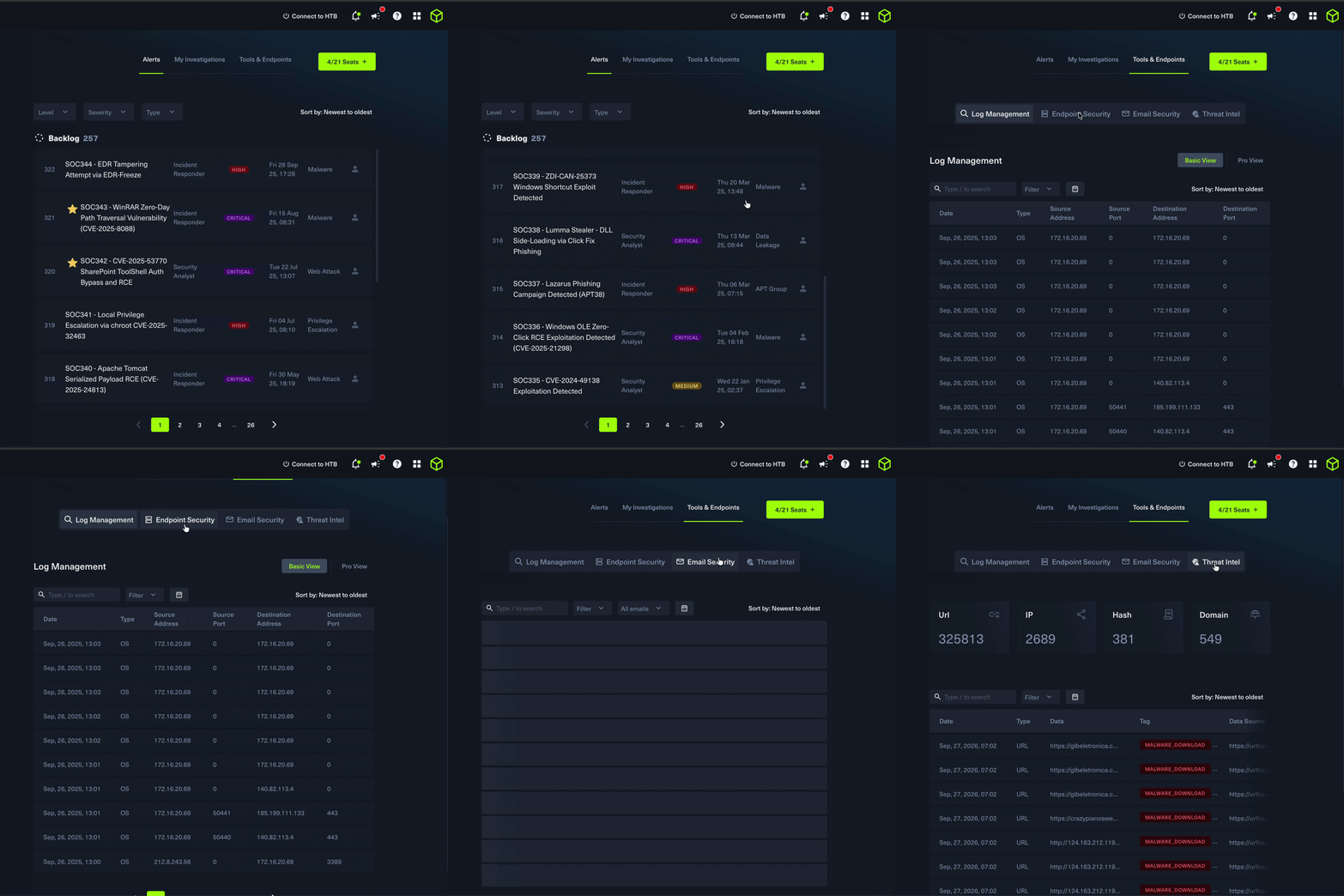
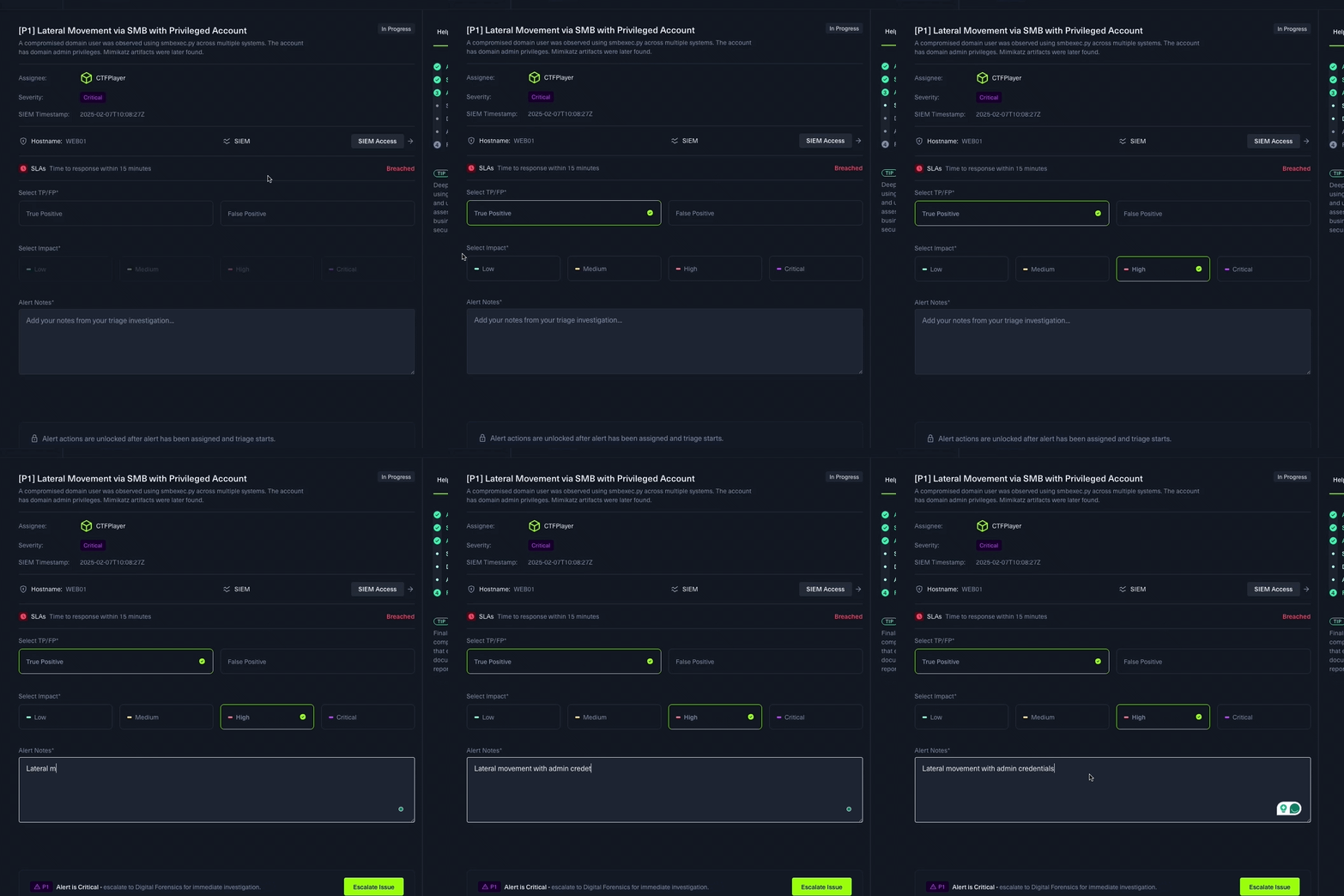
SOC Range
Give analysts realistic alerts to investigate from backlog to closure.
They practice triage, evidence gathering, escalation, and response using SOC workflows before the decision carries real operational consequences.

Threat Range
Put SOC and DFIR teams through realistic, multi-stage attacks.
Measure how effectively they detect, triage, escalate, and respond together.
Track measures including MTTA, MTTR, escalation quality, accuracy, and the Threat Resilience Index.
You find weak points in the response before a real attacker does.

Healthcare cyber resilience
Build the technical depth, cross-functional judgment, and measurable readiness healthcare organizations need when disruption becomes operational.
Crisis Control
Ransomware is more than a malware problem in healthcare.
A serious incident can put technical teams, leadership, communications, and operational decision-makers under pressure at the same time.
Crisis Control lets cross-functional teams rehearse those decisions alongside a live technical simulation.
Test the runbook before your people have to rely on it.
Completion rates tell you who finished training.
They don't tell you who can respond.
Cyber Workforce Intelligence + Enterprise Reporting
Give healthcare security leaders a measurable view of areas such as:
Readiness becomes something you can demonstrate to leadership, auditors, and regulators.
Cyber Workforce Development
A small number of experienced people often carry a disproportionate share of difficult investigations and escalations.
That works until they're unavailable, burned out, or gone.
And healthcare organizations can't always hire their way out of the problem.
Create more capability behind your strongest people.
Build a team with enough depth that every difficult incident doesn't depend on the same few people.
AI is changing both sides of healthcare cybersecurity.
Attackers can use it to move faster.
Security teams can use agents to take on more routine work.
But accountability for the result still sits with people.
Practitioners need to know
Hack The Box develops both sides of AI-era capability.
Build hands-on capability through AI security content, the AI Red Teamer path, and COAE.
Develop the judgment people need to direct and supervise AI-driven security work.
AI can increase capacity.
Skilled people determine whether that capacity makes you more ready.
Practice realistic attacks before technical compromise puts critical services under pressure.
Build personal capability, then test whether people can perform together.
Give more practitioners the repetitions needed to handle harder work.
Move beyond course completion to measurable skills and team performance.
Give leadership, auditors, and regulators evidence of what the workforce has demonstrated.
The operational value of readiness
The value of workforce development shows up when teams can act faster and more effectively.
The Forrester Total Economic Impact study commissioned by HTB modeled outcomes including:
50%
Threats acknowledged faster.
30%
Incidents contained sooner.
15% → 8%
Escalation probability on at-risk incidents nearly halved.
35%
Junior practitioners became productive in three to four months rather than six to nine.
4%
More capability stayed inside the organization.
For healthcare, the operational outcome matters most.
A more capable team has a better chance of containing the incident before disruption spreads.
In your demo, we'll show you how to
We'll focus on the workforce and operational risks that matter to your healthcare organization.
Not a generic platform tour.

Required training and hands-on cyber capability solve different problems.
Cyber Workforce Development focuses on the practitioners responsible for defending the organization.
It lets you assess what they can do, develop gaps, drill realistic incidents, and measure performance afterward.
The supplied healthcare material identifies HIPAA as a key requirement for US healthcare organizations.
HTB develops and measures the technical workforce capability behind security operations.
It provides readiness evidence rather than certifying HIPAA compliance.
The supplied material identifies NIS2 as an important European healthcare requirement.
Hands-on development, role-based training, realistic exercises, and readiness reporting can help organizations demonstrate how cyber capability is being built and tested.
HTB doesn't certify NIS2 compliance.
SOC Range gives individual analysts realistic detection, triage, and response practice.
Threat Range tests technical teams against multi-stage attacks.
Crisis Control extends the exercise into cross-functional decision-making so the wider organization can rehearse the response alongside the technical team.
Tabletops test important decisions and coordination.
HTB can connect that layer with hands-on technical practice and live team simulations.
That lets you develop individual skills, measure technical response, and rehearse wider crisis decisions as parts of the same readiness program.
Cyber Workforce Development helps organizations build more capability internally.
Role-based paths, hands-on practice, advanced labs, and certifications give junior and mid-level practitioners a route toward more advanced roles while keeping experienced people challenged.
HTB covers both security for AI and AI for security.
Practitioners can develop offensive AI-security skills while security teams build the judgment needed to direct, validate, and override AI agents used in their work.
Find the gaps before the pressure is real.
Build capability behind your strongest people.
Drill the team against realistic attacks.
Rehearse the wider response.
Then measure what changed.
Because in healthcare, cyber readiness protects more than systems and data.
It helps protect the operations people depend on.
Fill the form to schedule a live product demo and Q&A about our cyber readiness solutions.
Maximum curriculum management flexibility, enhanced skills reporting, and engaging gamification features. Book a demo to get the business results.
Your plan includes: