For Offensive Cybersecurity Leaders

Prove your offensive team is getting sharper

Build and benchmark the skills your offensive cybersecurity and penetration testers need against realistic, full-chain attack paths. See where capability is growing, where gaps remain, and whether your team is ready for the next engagement.
banner-logo-deloittebanner-logo-easportsbanner-logo-toyotabanner-logo-pumaVerizon_SolidWordmark_wht_RGB-1banner_logo_emersonbanner-logo-googlebanner-logo-awsbooking-holdings-logo-1banner-logo-siemensbanner-logo-autodesk-2-1banner-logo-contextbanner-logo-bugcrowdbanner-logo-ynov-campusbanner-logo-intel
Industry recognition Named a Leader in The Forrester Wave™, Q1 2026
Agentic AI readiness
5/5 for Agentic AI Readiness
Global adoption
850+ enterprises
5M+ users

Is your offensive capability moving forward or standing still?

An annual penetration test tells you what happened at one point in time. It doesn’t tell you whether your team is getting better between engagements.

You may have a readiness gap if:

Advanced skills live with a handful of operators

The team excels at isolated techniques but struggles to chain them across a full enterprise environment

You can’t benchmark offensive capability quarter over quarter

Development depends on whatever happens to appear in the next engagement

Strong operators can’t see a clear path to deeper technical roles

AI systems are entering scope faster than your team can build red-team expertise

Your team may be busy. That doesn’t mean its capability is growing.

Continuous readiness

Turn offensive development into a continuous loop

Assess

Set an objective baseline across the team

Use hands-on benchmarking to see where operators are strong, where skill gaps sit, and who needs deeper development.

Build

Give each operator a path based on the skills they need next

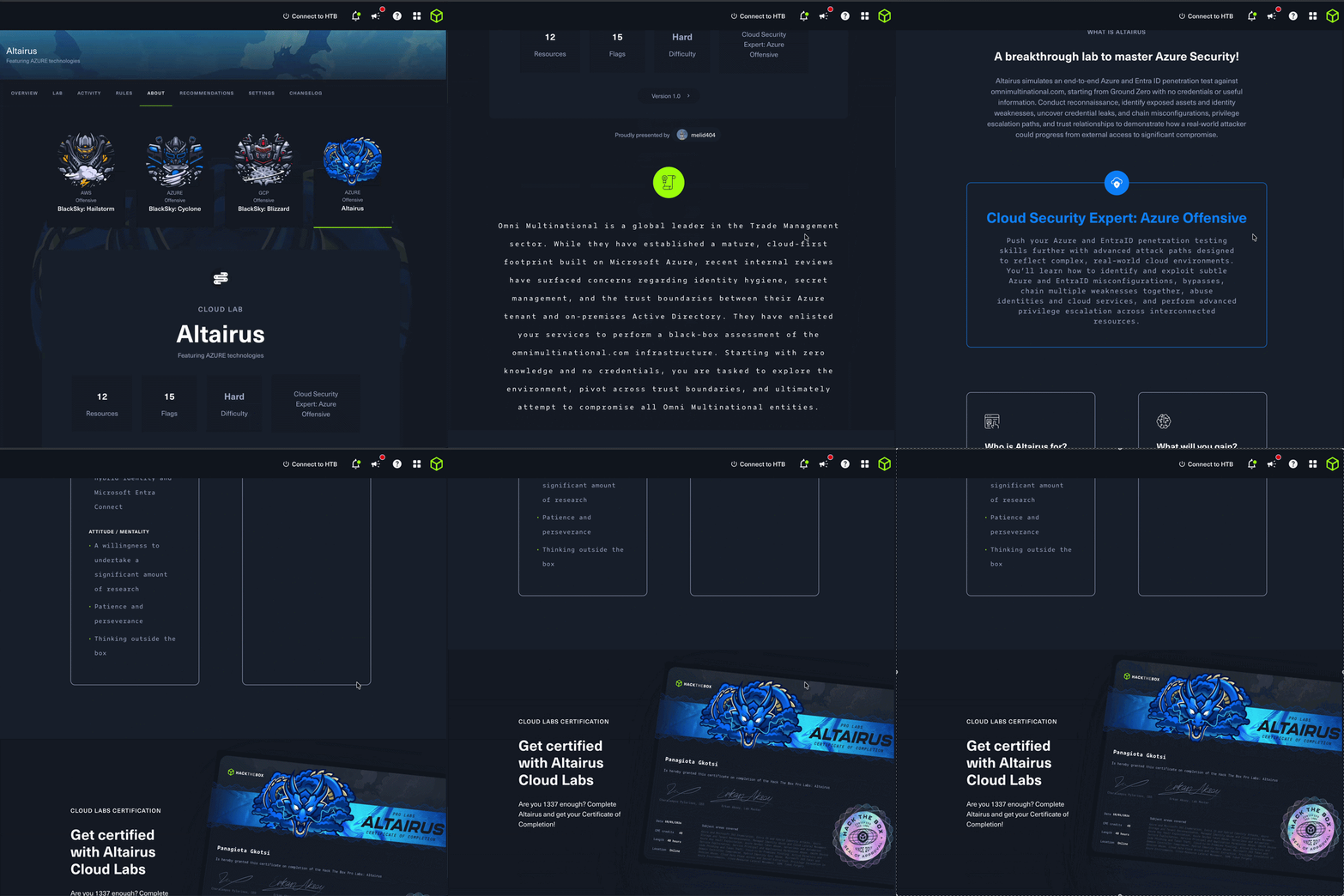
Develop offensive depth through structured job-role paths and practical certifications including HTB CPTS, HTB CAPE, and HTB COAE.

Drill

Move beyond isolated exercises

Give analysts realistic aGive the team repeated practice against realistic enterprise attack chains where chaining, pivoting, exploitation, and judgment matter.

Measure

Reassess capability over time

Track whether gaps are closing and give leadership evidence that the offensive bench is growing.


Then repeat.

Why offensive teams use HTB

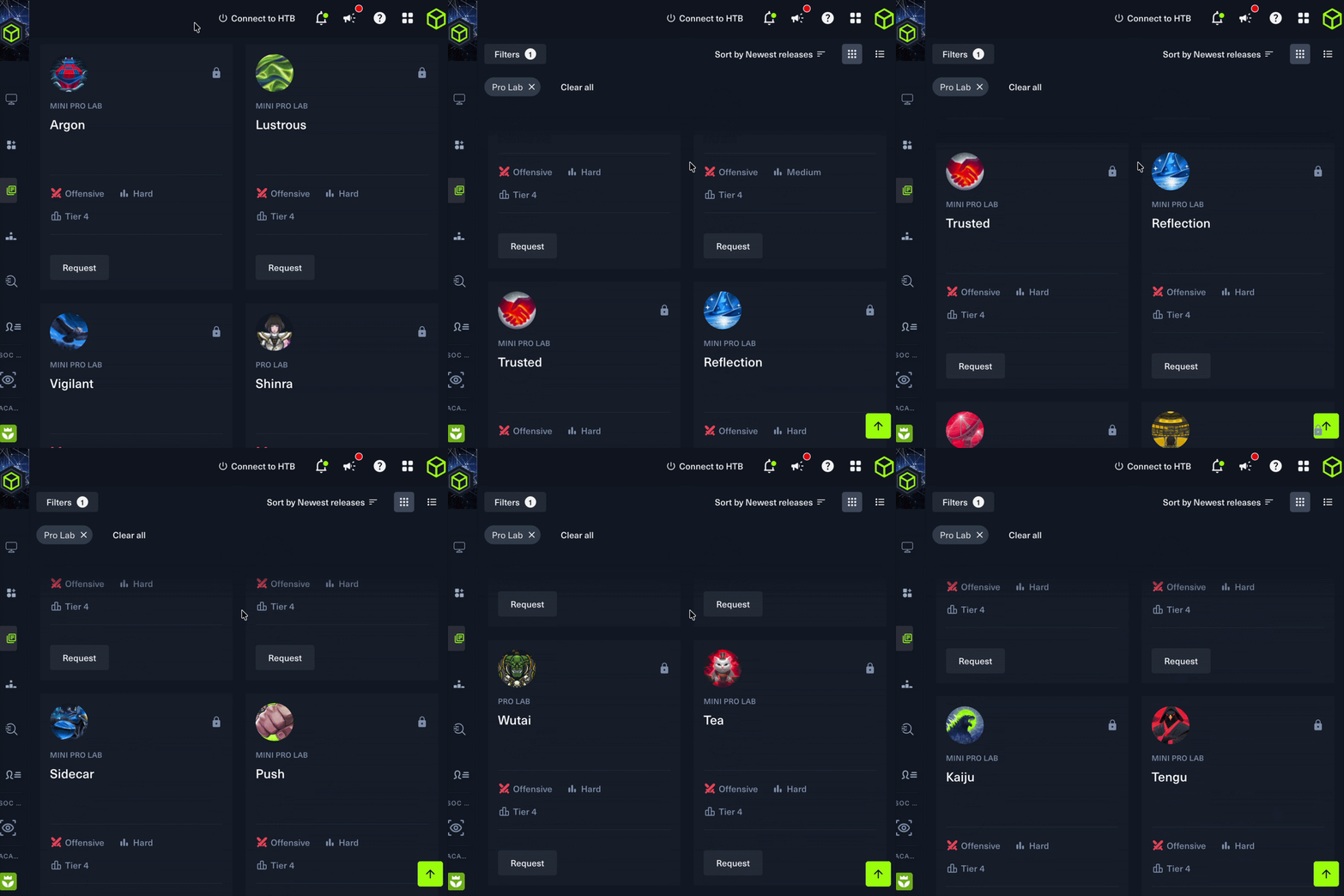
Practice complete attack paths

Operators work across realistic, multi-stage environments rather than practicing every technique in isolation.

Develop the team between engagements

Skill growth doesn’t have to wait for a suitable client scope or annual exercise.

Benchmark capability under pressure

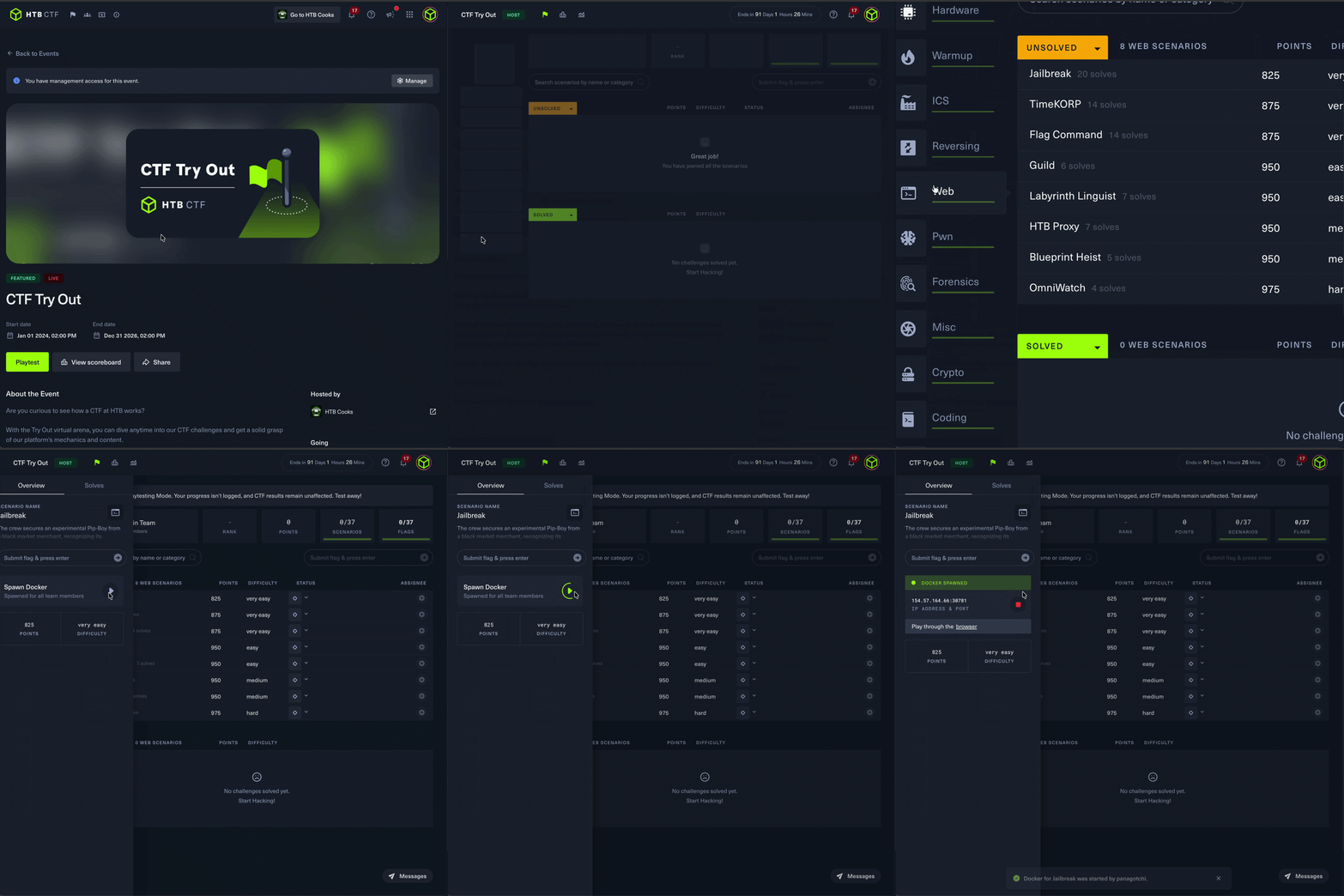
Hands-on events show where the team is strong and where development is still needed.

Build specialist depth

Create progression into advanced enterprise, cloud, and AI offensive security.

Make capability visible

Turn team development into something you can track and discuss with leadership instead of relying on anecdotal evidence.

Make the investment case with evidence

Your leadership team doesn’t need another list of completed courses.
Show them whether the offensive bench is actually moving.


HTB gives you a way to benchmark team readiness over time, identify skills that need investment, and connect development to applied offensive capability.

cribl-logo

"A lot of times when a new CVE comes out, Hack The Box has content for it shortly thereafter and you can play around with that vulnerability and exploit it, learn how to detect it, and remediate it in your own environment." -

Robert LackeySr. Staff Product Engineer at Cribl

The Analysts

Forrester recognition

HTB’s vision for hybrid human-AI readiness is called "compelling."

5/5 Agentic AI Readiness

"Organizations looking to engage cybersecurity talent and prepare them for an agentic future through gamified, challenge-based learning will find Hack The Box a strong fit.


G2 CROWD

4.8 ★★★★★
What you'll see in the demo

See where your offensive team stands today

In your demo, we'll show you how to:

✓ Baseline individual and team capability
✓ Identify offensive skills gaps
✓ Build development paths around role and skill needs
✓ Give operators realistic full-chain practice
✓ Benchmark applied skill with competitive events
✓ Develop AI red-team capability
✓ Track improvement over time

The walkthrough will focus on your offensive team and the capability you need to build, not a generic product tour.

Common questions from offensive team leaders

We already run annual penetration tests. Why do we need this?

An annual test tells you what was found during that engagement. It doesn't show whether your team's capability is developing throughout the year.

Continuous hands-on practice gives operators repeated exposure to complex attack paths, while regular benchmarking shows whether the team is progressing.

My team already gets hands-on practice through real engagements.

Live engagements are valuable, but the scope determines what your team gets to practice.

Labs let operators deliberately work on unfamiliar techniques and complex attack paths before a live engagement becomes the first place they try them.

How is this different from isolated CTF challenges?

Individual challenges are useful for practicing specific skills.

Professional Labs recreate multi-machine enterprise environments where operators have to connect techniques across a complete attack path.

CTF Events can then serve a different purpose by benchmarking applied skills across individuals and the team.

Can we benchmark individual operators as well as the team?

Yes. CTF Events & Skills Benchmarking can produce individual and team-level skills data, helping you see strengths, gaps, and development priorities.

How does this help with retention?

The Offensive Security Manager / Lead material identifies visible progression as a core retention need.

Structured role development, advanced hands-on practice, and practical certifications give operators a clear next level to work toward rather than repeating the same development cycle.

What about AI red teaming?

HTB includes an AI Red Teamer path and COAE for hands-on offensive AI capability, covering the emerging skills needed to attack and secure AI systems and agents.

Don’t wait for the next engagement to expose the gap.

Know where your offensive team is strong. Find where capability is starting to stall. Give every operator somewhere harder to go next. Then benchmark the team again and prove it moved.

Get a full demo with our team

Fill the form to schedule a live product demo and Q&A about our cyber readiness solutions.

The #1 platform to build attack-ready teams and organizations

Maximum curriculum management flexibility, enhanced skills reporting, and engaging gamification features. Book a demo to get the business results.

Your plan includes:

  • ✓ Unmatched content library
  • ✓ Workforce development plans
  • ✓ Centralized user management
  • ✓ Advanced analytics & reporting
  • ✓ Source, hire, and retain talent

Keep exploring

Webinar

Rusty: A DFIR Walkthrough of a Real MSSP Incident

Join experts from Hack The Box and Triskele Labs for a technical walkthrough of a real-world ransomware and data exfiltration investigation based on a closed-source MSSP incident.

Whitepaper

Cybersecurity Workforce Intelligence Report

This report examines how organizations and cybersecurity professionals are adapting to emerging risks, particularly those driven by artificial intelligence, which are introducing new attack surfaces and reshaping security priorities.