Assess
Start with an objective baseline.
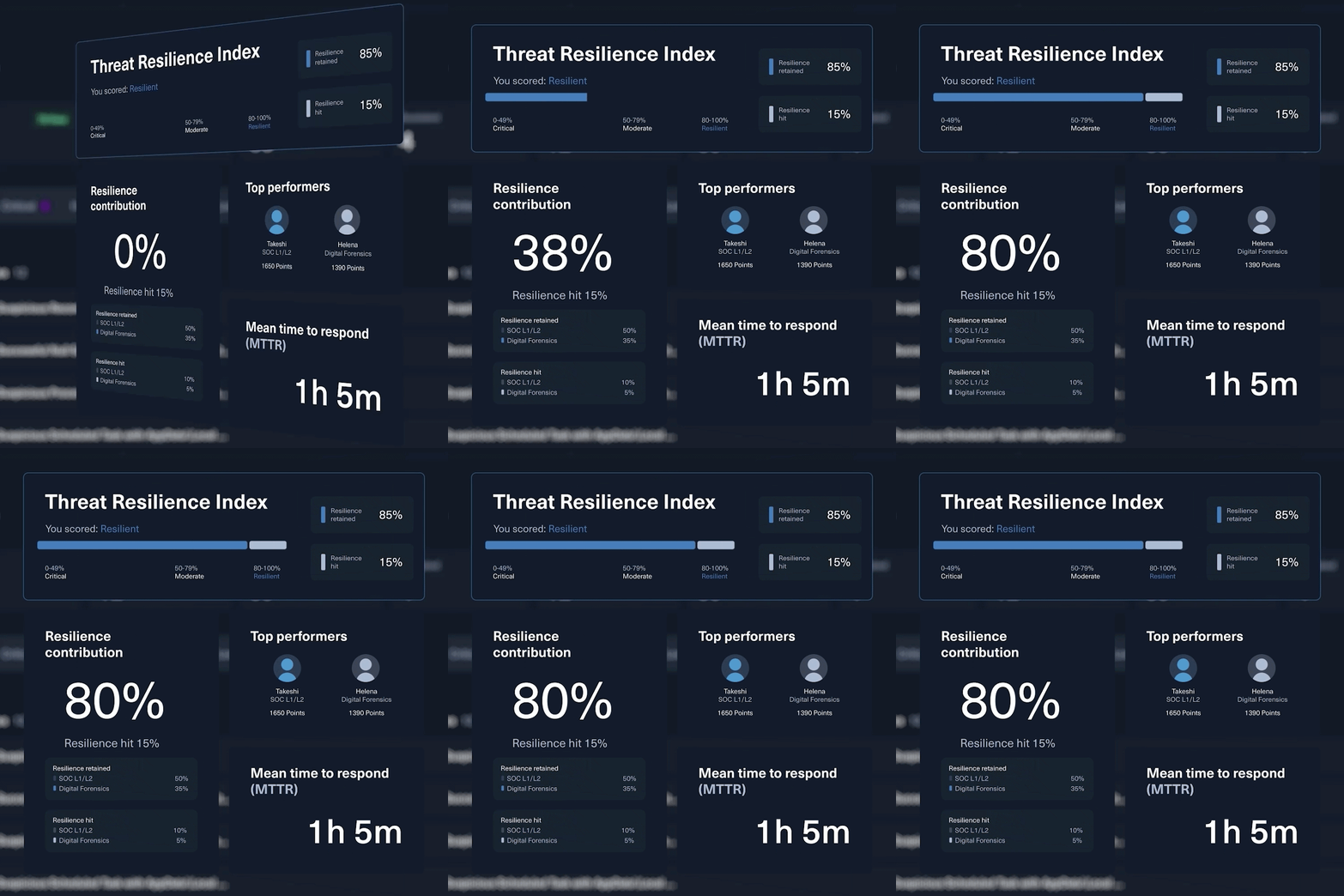
Benchmark individuals and teams against hands-on tasks to see where capability is strong and where risk remains.
Turn workforce capability into measurable cyber readiness.Benchmark your people, close the gaps that create risk, drill teams against realistic threats, and give your board evidence that capability is improving.
Your security stack can be mature.
Your policies can pass an audit.
Your teams can complete their training.
None of that answers the question you face when something goes wrong.
Can your people perform?
You may have a readiness gap if:
The board sees security activity but not workforce capability
Team performance stays invisible until an incident exposes it
Critical expertise sits with a small number of senior people
You can report training completed but not skills gaps closed
Incident plans exist but haven’t been tested under pressure
AI agents are entering security workflows without a clear way to prove who can direct and override them
Regulators, auditors, or insurers ask for evidence you have to assemble manually
Passing the audit and being ready for the attack are not the same test.
Start with an objective baseline.
Benchmark individuals and teams against hands-on tasks to see where capability is strong and where risk remains.
Target the gaps.
Give people role-based development tied to the work they perform and the skills the organization needs.
Test capability under pressure.
Move from individual skills into realistic scenarios where analysts, incident responders, offensive teams, and leadership have to perform.
Turn performance into evidence.
Track readiness over time and give leadership a clearer view of where capability is improving and where investment is still needed.
Assess. Build. Drill. Measure. Repeat.
Skills benchmarking
You can’t manage a readiness gap you can’t see.
Hands-on assessments and skills benchmarking expose strengths and weaknesses across individuals and teams.
That gives security leaders an objective starting point for development rather than relying on course history, certification counts, or anecdotal feedback.

Role-based development
Once you know the gaps, development can follow the risk.
Role-based paths build capability across defensive, offensive, incident response, cloud, and emerging AI-security disciplines.
Your people get development tied to the jobs they perform.
You get a clearer link between workforce investment and security priorities.
.gif)
Team readiness
Individual knowledge is only part of readiness.
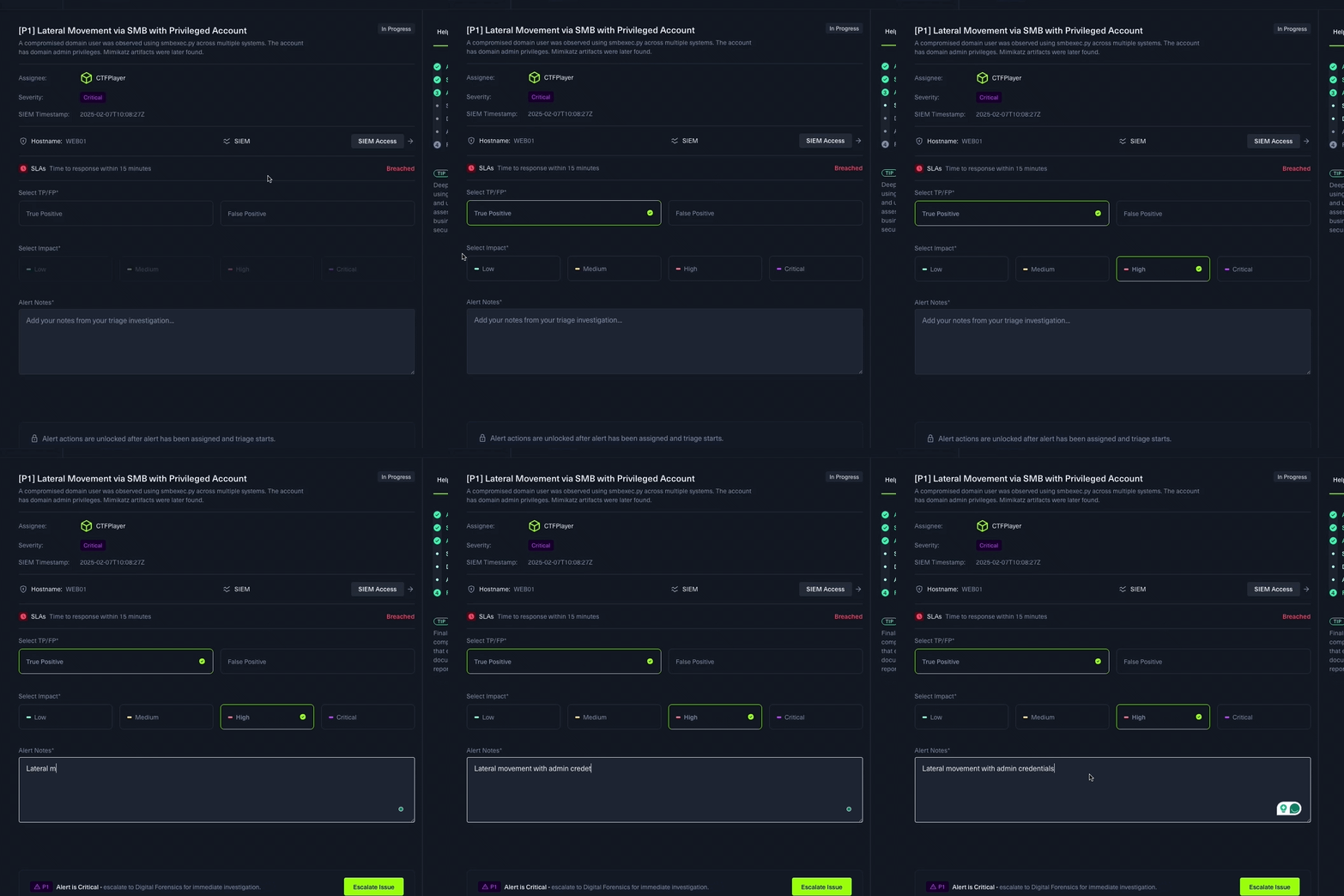
Threat Range puts defensive teams through realistic attack chains and measures how they detect, triage, escalate, and respond.
Crisis Control extends the test beyond the technical team so decision-making, communication, and incident plans can be rehearsed before a real crisis.
Your first full test of the plan shouldn’t be the breach.

Identify workforce gaps that can affect operational performance rather than treating training as a separate HR metric.
Build individual capability, then test how people perform together against realistic threats.
Create a repeatable view of capability rather than waiting for an incident, audit, or annual exercise to expose it.
Develop the judgment people need to direct and challenge AI agents as they take on more security work.
Give boards and other stakeholders a clearer picture of workforce readiness, skills gaps, and progress.
Cyber Workforce Development connects workforce investment to the measures security leaders already care about.
Proof of workforce impact
Analyst recognition


HTB was named a Leader in The Forrester Wave for Cybersecurity Skills and Training Platforms.
50%
The Forrester TEI composite organization reported a 50% reduction in mean time to acknowledge for its incident response team.
30%
The same study reported a 30% reduction in mean time to respond.
700K+
Organizations use HTB to build hands-on cyber capability across their workforces.
4.5M+
Your people develop their skills inside a global cybersecurity community built around hands-on practice.
The business case isn’t more training. It’s a workforce that can perform, with evidence that shows it.
In your demo, we'll show you how to
We’ll focus on the readiness questions your organization needs to answer, not take you through a generic platform tour.

Training activity tells you what people consumed.
Cyber Workforce Development gives you a way to baseline capability, target development, test performance, and measure what changed afterward.
The shift is from providing training to proving readiness.
Certifications can be valuable evidence of individual skill.
They don’t show how the whole team performs together during an incident or whether your current workforce gaps match the risks your organization faces.
HTB combines practical certifications with hands-on benchmarking, role-based development, team drills, and readiness reporting.
The question is what those exercises tell you afterward.
Threat Range measures technical team performance against realistic attack chains.
Crisis Control can extend rehearsal across the wider organization so technical response, leadership decisions, and communication are tested before a live crisis.
Start with an objective baseline.
Identify the gaps that matter.
Develop and drill the workforce.
Then measure again.
Cyber Workforce Intelligence and Enterprise Reporting give you evidence of progression and readiness to support the conversation with leadership.
AI changes the work people perform.
It doesn’t remove the need for accountable human judgment.
As agents absorb more routine work, people need to know when to trust, validate, escalate, or override their output.
The CISO material in HTB's workforce model treats readiness across people and the AI agents they supervise as part of the same problem.
Cyber Workforce Development is built as a continuous program rather than a course catalog.
Assess the workforce.
Build the gaps.
Drill performance.
Measure readiness.
Then repeat as your people, threats, technology, and business change.
Know where your workforce is strong.
Find the gaps before an attacker does.
Build the people behind your security stack.
Then give your board evidence that your organization is more ready than it was last quarter.
Fill the form to schedule a live product demo and Q&A about our cyber readiness solutions.
Maximum curriculum management flexibility, enhanced skills reporting, and engaging gamification features. Book a demo to get the business results.
Your plan includes:
Whitepaper
What three years of competition data reveal about speed, coverage, and the changing value of expertise.