United States
SEC disclosure requirements put incident assessment and response under a tight clock. Hack The Box helps teams rehearse technical response and leadership decisions before the pressure is real.
Build, drill, and measure the people protecting your financial institution. Give security leaders evidence that teams can respond under pressure, meet regulatory expectations, and keep critical operations moving around the world.

Your institution can have mature controls, experienced people, and a well-funded security stack.
The gap appears when you have to prove how those pieces perform together.
Around the world, security teams face growing pressure to demonstrate operational capability, not simply document controls.
You may have a readiness gap if:
Training records show activity but not demonstrated capability
Critical knowledge sits with a handful of senior people
SOC performance isn't tested until a real incident or formal exercise
Incident plans exist but haven't been rehearsed under pressure
Offensive teams aren't continuously practicing full attack chains
AI is entering security workflows faster than people are being prepared to supervise it
Readiness evidence has to be assembled when a regulator, auditor, insurer, or board asks for it
The issue isn't whether you've invested in cybersecurity.
It's whether you can prove the workforce behind that investment is ready.
Wherever you operate, financial-services regulation is raising the bar from documented controls to demonstrated readiness.
SEC disclosure requirements put incident assessment and response under a tight clock. Hack The Box helps teams rehearse technical response and leadership decisions before the pressure is real.
DORA and TLPT put operational resilience and threat-led testing under scrutiny. Hack The Box lets teams drill realistic attacks, expose gaps, and measure readiness before formal testing.
FCA and PRA operational resilience expectations and CBEST demand more than readiness on paper. Hack The Box gives offensive, defensive, and leadership teams hands-on practice against realistic scenarios.
Assess capability. Build the gaps. Drill under pressure. Measure what changed.
So when a regulator, board, auditor, or insurer asks if your workforce is ready, you have evidence of what your people can do.
Compliance is the floor. Demonstrated capability is the test. Readiness becomes something you build and measure before an incident, regulatory test, or audit exposes the gaps.
Baseline the people behind your controls.
Hands-on skills benchmarking exposes strengths and gaps across individuals and teams.
Target development at the gaps you find.
Create role-based paths from entry to principal across defensive, offensive, cloud, incident response, and AI-security roles.
Put capability under pressure.
Give individuals realistic practice and bring teams together against full attack chains and crisis scenarios.
Turn performance into evidence.
Track skills, threat coverage, response performance, and readiness over time.
Assess. Build. Drill. Measure. Repeat.
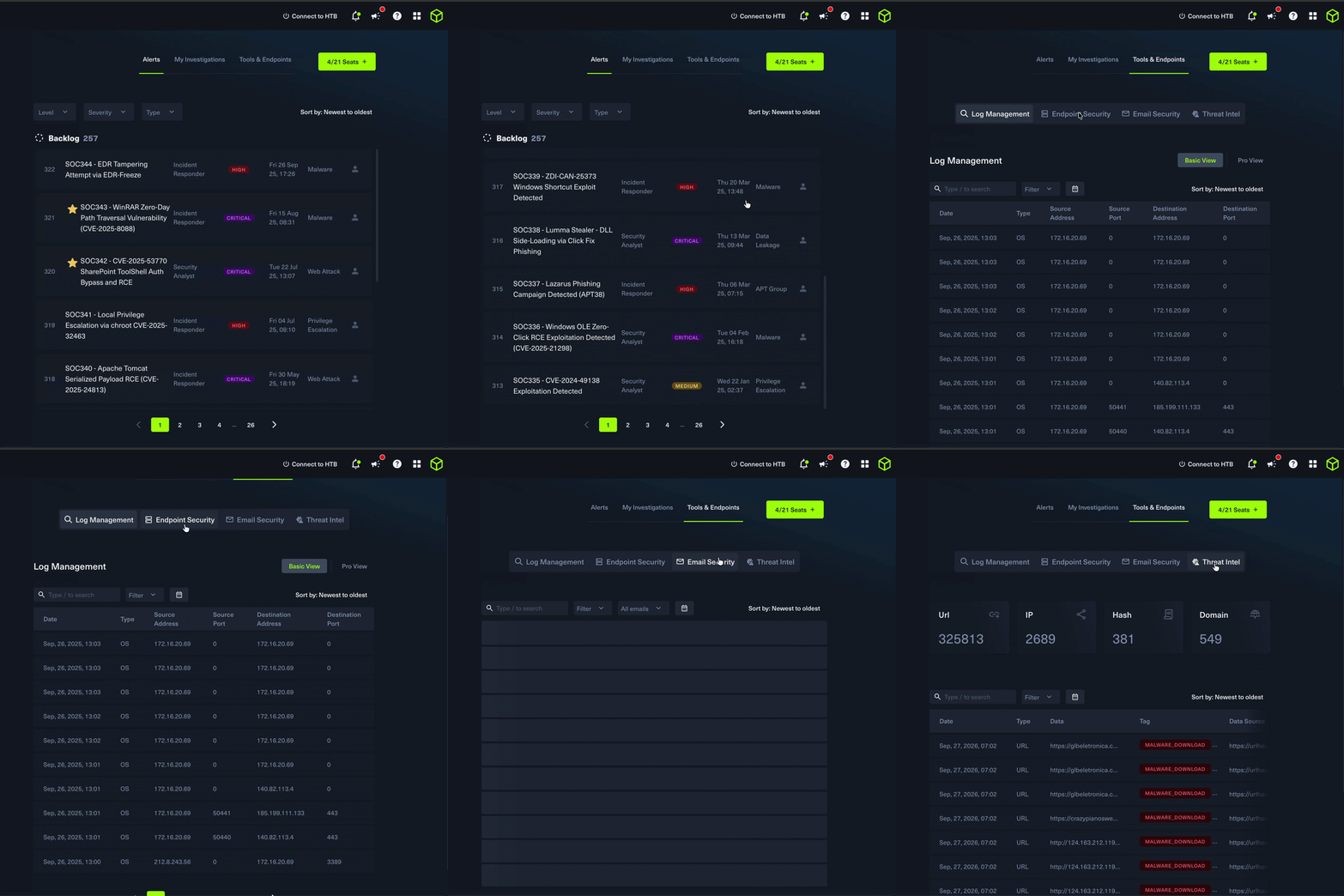
SOC Range
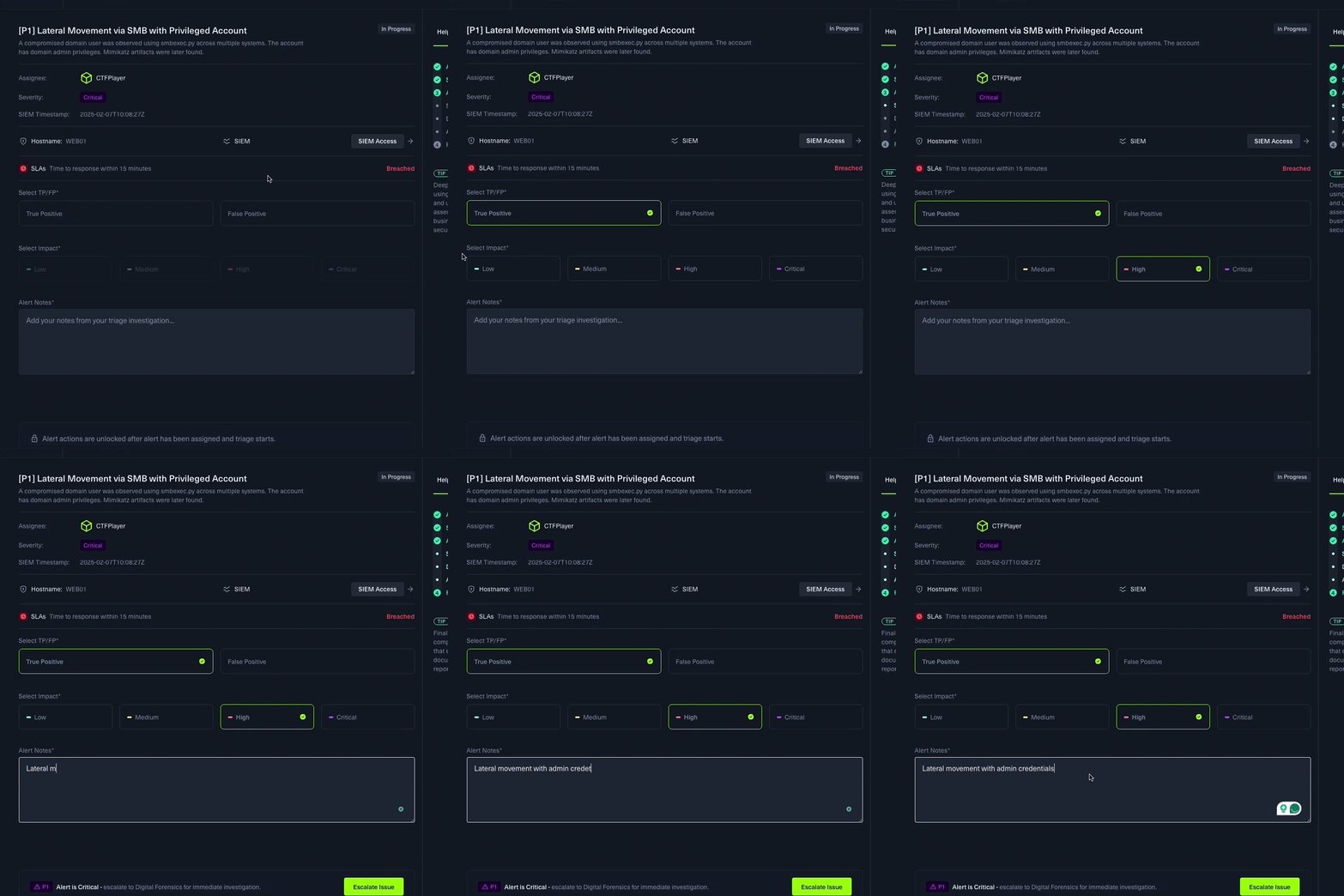
SOC Range gives analysts realistic detection, triage, and response practice without waiting for the live queue to teach them.
Analysts investigate realistic alerts, work through the evidence, make decisions, and close cases.
That creates more opportunities to build judgment before mistakes carry real operational consequences.

Threat Range
Threat Range moves from individual practice to team performance.
SOC and DFIR teams work through realistic, multi-stage attacks and measure how effectively they detect, triage, escalate, and respond.
Track performance through measures including:
The result is evidence of how the team performs, not an assumption based on what it completed.

For financial institutions in the EU and UK, TLPT and CBEST make the readiness question especially direct.
The regulated test is going to put people, defenses, and procedures under pressure.
You can wait for that exercise to find the gaps.
Or find them first.
Threat Range gives defensive teams practice against the TTPs that threat-led testing is designed to probe.
Professional Labs give offensive teams complex enterprise environments where they can practice chaining attacks, pivoting, exploitation, and adversary emulation.
MITRE ATT&CK coverage helps you see where teams have demonstrated experience and where exposure remains.
The goal
When the formal test arrives, it finds a team that has already practiced performing under pressure.
A major financial-services incident creates more than a technical response.
While defenders investigate and contain the attack, the organization has decisions to make.
How serious is the incident?
What has been affected?
Who needs to know?
What reporting obligations have been triggered?
What does leadership communicate?
Crisis Control brings cross-functional decision-making together with a live technical simulation.
The operational need
The exact rules differ.
Your technical response and executive decisions have to work under the same pressure.
Financial institutions are adopting AI while attackers are doing the same.
That changes the workforce problem from both directions.
AI can take on more routine security work.
It can also introduce new systems, attack surfaces, and decisions that need qualified human oversight.
Your people need to know
HTB Cyber Workforce Development addresses both sides.
Build and certify the skills needed to test models, data, and agentic systems through AI attack and defense content, the AI Red Teamer path, and COAE.
Develop the judgment operators need to direct AI agents as part of their work.
Give people hands-on practice with AI inside live environments where human and machine decisions can be observed and measured.
AI can increase your team's reach.
It still needs skilled people behind it.
Develop offensive and defensive skills through hands-on environments instead of relying on passive content.
Move from solo skills development into SOC, DFIR, offensive, and cross-functional exercises.
Map workforce capability to NIST NICE, DoW DCWF / 8140, ENISA ECSF, MITRE ATT&CK, and relevant regulatory requirements.
Support teams facing DORA and TLPT in the EU, FCA/PRA operational resilience and CBEST in the UK, SEC disclosure pressures in the US, and PCI DSS requirements across markets.
Turn individual and team performance into evidence that can be used with leadership, auditors, regulators, and insurers.
The business case isn't built on training activity.
It's built on what changes afterward.
Proof of workforce impact
Analyst recognition


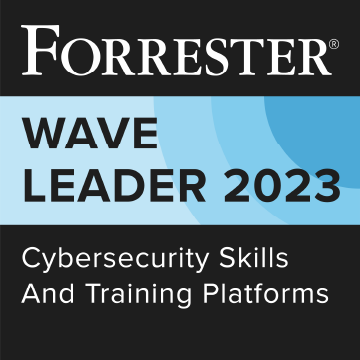
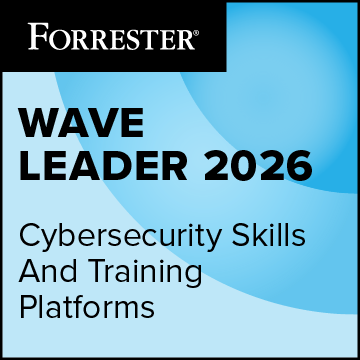
HTB was named a Leader in The Forrester Wave for Cybersecurity Skills and Training Platforms.
A Forrester Total Economic Impact study commissioned by HTB modeled a composite organization and found:
50%
Threats acknowledged faster.
30%
Incidents contained sooner.
15% → 8%
Escalation probability on at-risk incidents nearly halved.
35%
Junior practitioners became productive in three to four months rather than six to nine.
50%
Managers could oversee three to four engagements rather than one to two.
Readiness has an operational return before it has a financial one.
In your demo, we'll show you how to
We'll focus the walkthrough on the regulatory environments, workforce risks, and operational priorities that matter to your institution.
Not a generic platform tour.
Compliance requirements and operational capability answer different questions.
Cyber Workforce Development helps you test the people behind your controls through hands-on assessment, development, drills, and measurement.
That gives you evidence of what teams can demonstrate, not just what has been documented.
The supplied financial-services material identifies the SEC four-day disclosure requirement as a key US pressure.
Crisis exercises can prepare technical teams and leadership to work under the same incident clock, while hands-on development and team drills build the underlying detection, investigation, containment, and response capability.
HTB provides workforce readiness evidence. It doesn't certify compliance with SEC requirements.
DORA raises the importance of demonstrated operational resilience, with TLPT placing additional pressure on the capabilities involved in withstanding realistic attacks.
HTB helps develop and drill those capabilities before formal testing.
HTB provides readiness evidence. It doesn't certify DORA compliance.
The supplied material specifically identifies FCA and PRA operational resilience and CBEST.
HTB gives defensive and offensive teams hands-on development against realistic attacker behavior, while Crisis Control supports cross-functional incident rehearsal.
Threat Range lets defensive teams rehearse against realistic attack chains and measure response.
Professional Labs develop offensive and adversary-emulation skills in complex enterprise environments.
That gives both sides repeated practice before a formal threat-led exercise puts them under scrutiny.
The supplied financial-services material identifies PCI DSS 4.0.1 as a key sector requirement and cites RS2 as a financial-services customer using HTB while meeting PCI DSS, SSF, and PCI PIN requirements.
HTB provides workforce development and readiness evidence rather than certifying PCI DSS compliance.
Periodic exercises give you snapshots.
Cyber Workforce Development builds capability between those snapshots.
Baseline the team, target gaps, develop individuals, drill teams, then measure again.
Your next exercise becomes a test of progress rather than the first place you discover a problem.
Yes.
The supplied material maps HTB capabilities across NIST NICE, DoW DCWF / 8140, ENISA ECSF, MITRE ATT&CK, and MITRE ATLAS for AI-system threats.
HTB addresses both security for AI and AI for security.
Teams can build AI red-team capability while practitioners develop the judgment needed to direct, validate, and challenge AI agents used in security work.
Baseline your people.
Build the gaps.
Rehearse realistic attacks.
Test technical and executive response together.
Measure what changed.
Then give your board, regulator, auditor, or insurer evidence of what your workforce can actually do.
Fill the form to schedule a live product demo and Q&A about our cyber readiness solutions.
Maximum curriculum management flexibility, enhanced skills reporting, and engaging gamification features. Book a demo to get the business results.
Your plan includes: