For SOC Managers

Build a SOC that doesn’t depend on the same two people

Give every analyst the hands-on practice to triage with better judgment, respond under pressure, and take more work off your senior team. Then measure whether MTTR, escalation rates, and L1 resolution are actually improving.
banner-logo-deloittebanner-logo-easportsbanner-logo-toyotabanner-logo-pumaVerizon_SolidWordmark_wht_RGB-1banner_logo_emersonbanner-logo-googlebanner-logo-awsbooking-holdings-logo-1banner-logo-siemensbanner-logo-autodesk-2-1banner-logo-contextbanner-logo-bugcrowdbanner-logo-ynov-campusbanner-logo-intel
Industry recognition Named a Leader in The Forrester Wave™, Q1 2026
Agentic AI readiness
5/5 for Agentic AI Readiness
Business impact
344% three-year ROI
In the Forrester TEI composite analysis

Your SOC may have a readiness gap if...

Your junior analysts complete training, but still escalate alerts your senior team could close in minutes.

New hires take months to become useful on the live queue.

Your strongest responders carry knowledge the rest of the team hasn’t built yet.

Runbooks exist, but the team hasn’t rehearsed them together against a realistic attack.

You report training activity, but can’t show the CISO whether the SOC is getting faster or better.

AI agents are taking on more triage, but your analysts haven’t practiced when to trust, validate, or override their output.

The problem isn’t a lack of training.

It’s not knowing whether the team can perform when the alert is real.

Continuous readiness

Build readiness as a continuous loop
rove

HTB Cyber Workforce Development gives your SOC a repeatable way to find gaps, build skills, rehearse response, and measure what changes.

Assess

Know where the team stands

Baseline capability against real tasks. See where skills are strong, where gaps sit, and where development needs to start.

Build

Develop analysts for the work they actually do

Give people structured, role-based paths from entry to advanced levels. Build the technical depth and judgment analysts need as their responsibilities grow.

Drill

Turn knowledge into response

Give analysts realistic alert practice on demand, then bring the team together against full attack chains. Rehearse detection, triage, escalation, and response before the real incident.

Measure

See whether readiness is improving

Track response performance and identify where the team still breaks down. Feed those gaps back into the next round of development and drills.


Then repeat.

Why SOC teams use HTB

Practice that looks like the job

Analysts work through realistic alerts, investigations, infrastructure, and attack chains rather than relying on theory alone.

Individual reps plus team drills

SOC Range builds the analyst’s operational judgment. Threat Range tests how the whole team performs together.

Development connected to readiness

Role-based learning, hands-on practice, team exercises, and measurement sit in one continuous program rather than separate training activities.

Performance you can report

Move the conversation beyond participation. Track the measures SOC leaders already care about, including MTTR, MTTA, escalation rate, and L1 resolution.

A path from junior to senior

Structured development helps analysts build deeper capability while giving managers a clearer view of where people are ready to take on more.

Build a business case around response, not training activity

CSPIRE

Since training with HTB, we’ve seen greater agility in addressing any issue that might arise and better detection rates. It’s been a real investment in strengthening our in-house talent. The HTB SOC Analyst pathway has provided a standard skill level that we can expect our defenders to live up to and to be measured against.

Conrad BellSVP, Chief Information Security Officer at Cspire

The Analysts

Forrester recognition

HTB’s vision for hybrid human-AI readiness is called "compelling."

5/5 Agentic AI Readiness

"Organizations looking to engage cybersecurity talent and prepare them for an agentic future through gamified, challenge-based learning will find Hack The Box a strong fit.


G2 CROWD

4.8 ★★★★★
What you'll see in the demo

See what this could look like for your SOC

We'll show you how to:

✓ Baseline current IR capability
✓ Give individual responders realistic SOC repetitions
✓ Rehearse SOC and DFIR teams against full attack chains
✓ Test whether run-books hold under pressure
✓ Find weak hand-offs before they slow a live response
✓ Measure MTTA, MTTR, escalation quality, and other response indicators
✓ Turn drill results into the next development priorities

Tailored around your incident response priorities, not a generic platform tour.

Common questions from SOC leaders

My team doesn’t have time for more training. How can I use HTB?

The point is to reduce the work that keeps landing on the same senior analysts. Scenario-based drills build the judgment that helps juniors resolve more correctly at L1 and cuts unnecessary escalation.

SOC Range also gives individual analysts on-demand practice that can fit around shifts without scheduling a full team exercise.

We already pay for certification courses, how is HTB different?

Certifications can validate knowledge. They don’t show how the team detects, triages, escalates, and responds together during a realistic incident.


HTB connects structured skill development with individual SOC practice, full-team drills, and measured response performance.

We’re deploying triage agents. Won’t they reduce the need for analyst development?

Agents can take more of the queue. Your team still owns the consequences when an automated verdict is wrong.

Analysts need the judgment to know what to validate, what to escalate, and when to override automation.

How is SOC Range different from Threat Range?

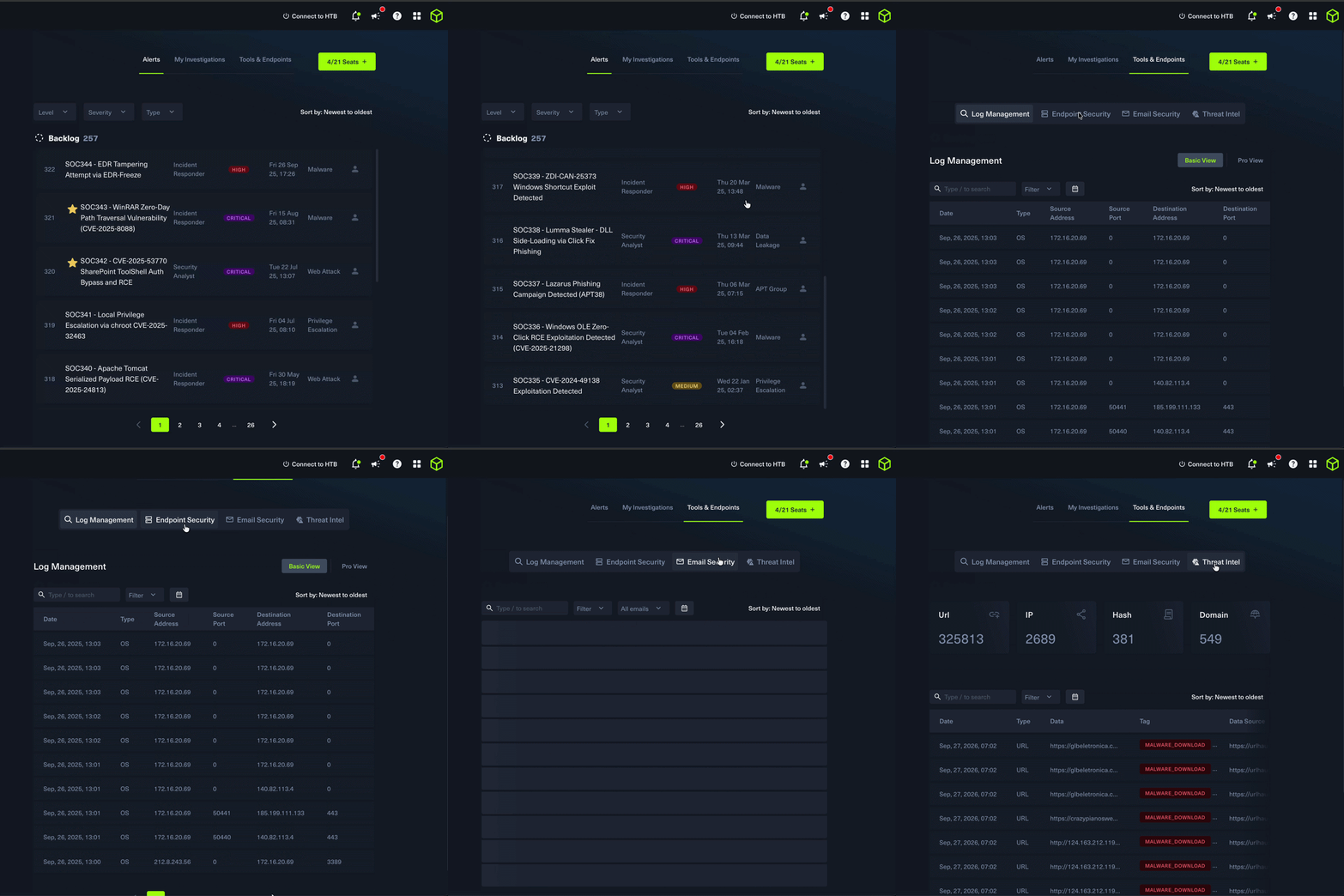
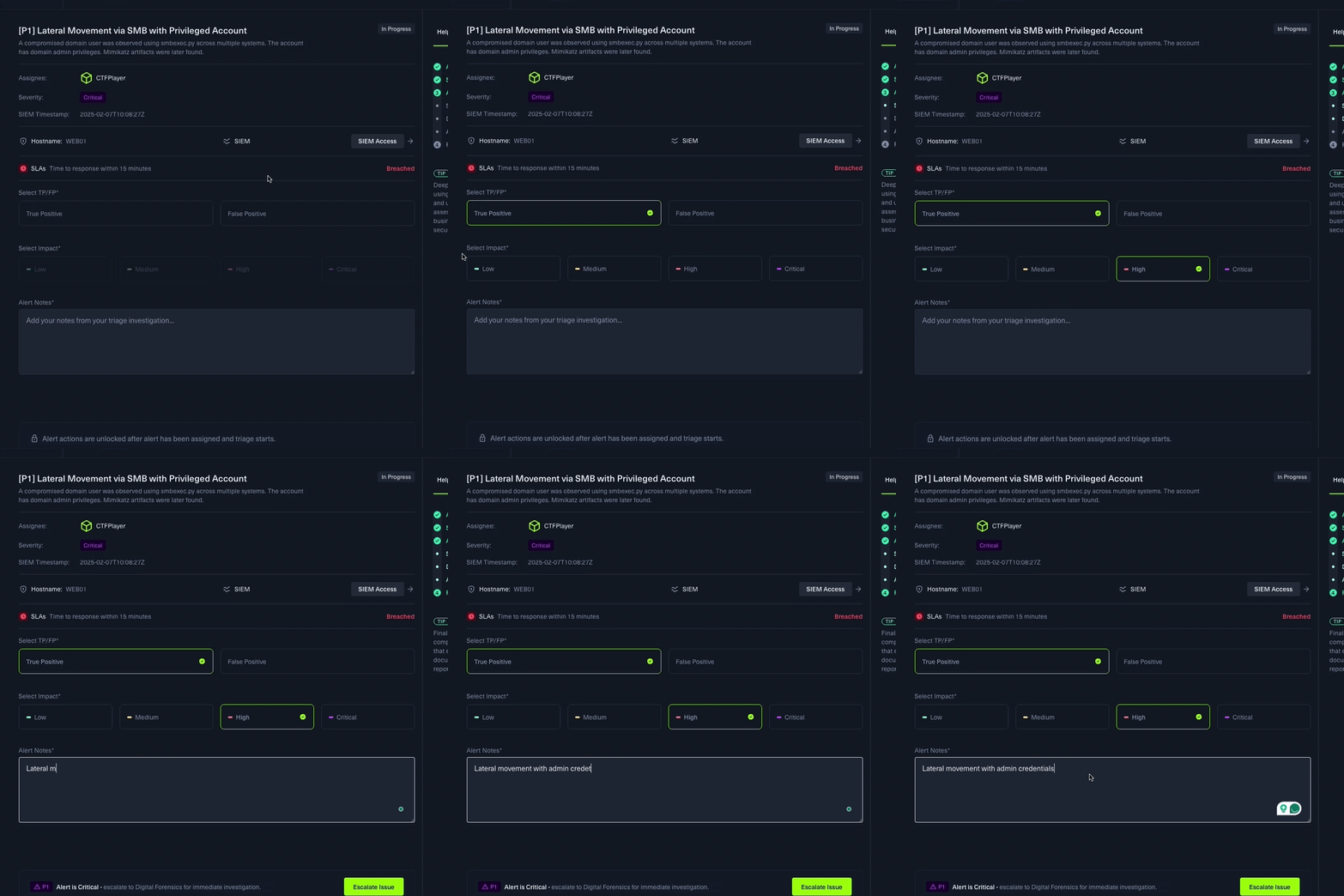
SOC Range gives individual analysts on-demand practice against realistic alerts and SOC workflows.

Threat Range brings the team together against end-to-end attack chains and measures how well they detect and respond as a unit.

They address different parts of the same readiness problem.

What can I measure?

SOC leaders can track performance measures including MTTD, MTTA, MTTR, false-positive and false-negative accuracy, SLA adherence, and escalation quality.

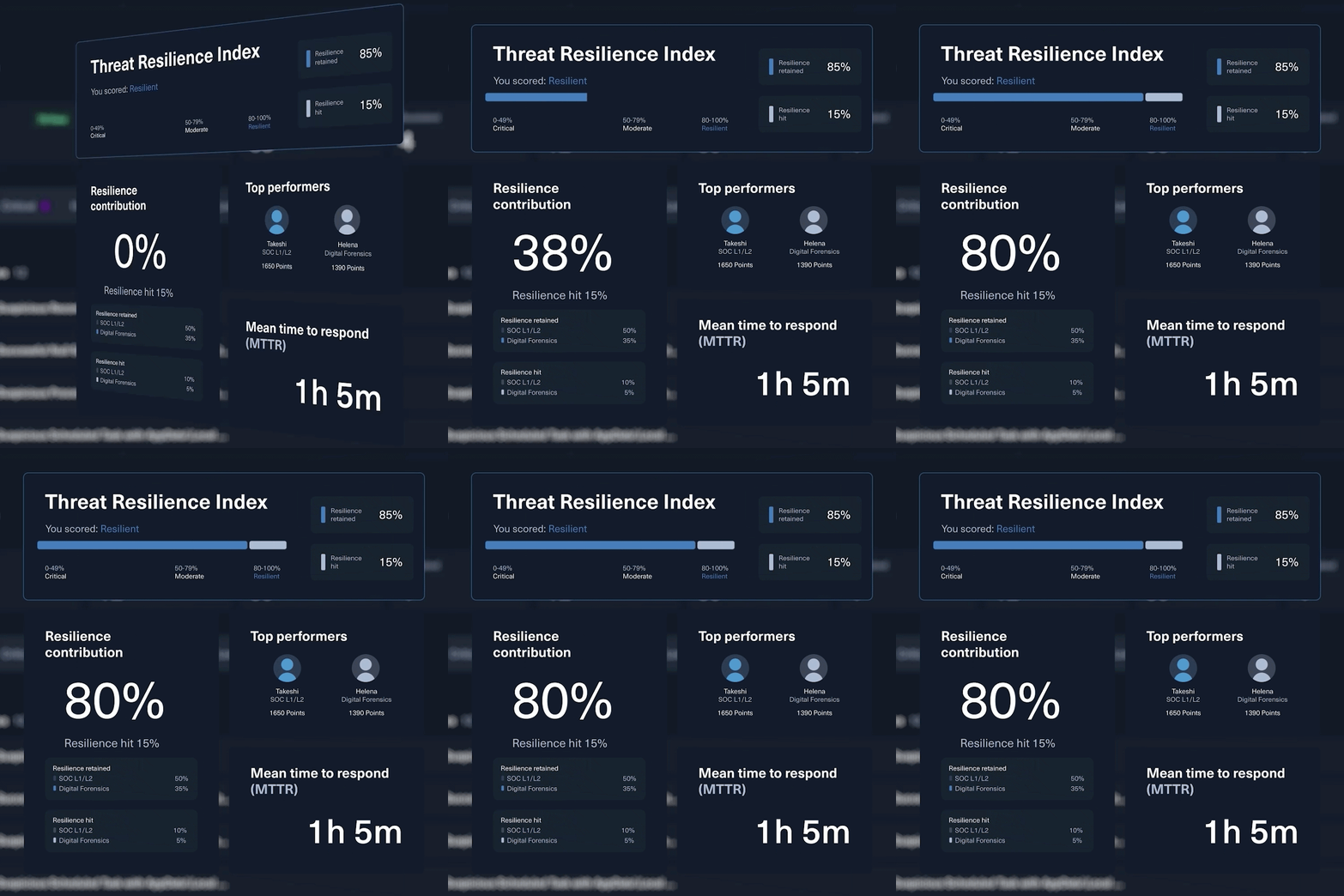
Threat Range also provides the Threat Resilience Index for an objective view of team readiness.

Does HTB fit with our existing systems?

The Enterprise Platform includes Single Sign-On and content management, plus APIs and LMS integration, so access, progress, and readiness data can connect with the systems your organization already runs.

Don’t find out who is ready during the incident.

Build analyst judgment before the queue tests it.
Drill the team before the attack tests it.
Measure readiness before someone asks you to prove it.

Get a full demo with our team

Fill the form to schedule a live product demo and Q&A about our cyber readiness solutions.

The #1 platform to build attack-ready teams and organizations

Maximum curriculum management flexibility, enhanced skills reporting, and engaging gamification features. Book a demo to get the business results.

Your plan includes:

  • ✓ Unmatched content library
  • ✓ Workforce development plans
  • ✓ Centralized user management
  • ✓ Advanced analytics & reporting
  • ✓ Source, hire, and retain talent

Keep exploring

Product Spotlight

Threat Range

Threat Range helps you prove how well SOC, DFIR, and incident response teams perform when it matters most. Build sharper coordination, expose costly gaps earlier, and give leadership clear evidence of readiness, speed, and resilience.

Whitepaper

Cybersecurity Workforce Intelligence Report

This report examines how organizations and cybersecurity professionals are adapting to emerging risks, particularly those driven by artificial intelligence, which are introducing new attack surfaces and reshaping security priorities.